

Dover Hoarding Cleanup Services
Choose our hoarding cleanup team for respectful, judgment-free service that restores safety, comfort, and peace of mind to your home. We handle every situation with care, professionalism, and complete confidentiality.
Get a Free QuoteOur Dover Junk Removal Services
Hoarding Cleanup in Dover, MA – Local Service Guide
Hoarding cleanup in Dover, MA requires a sensitive, thorough approach tailored to local needs. In neighborhoods like Powisset Street and Centre Street, residents often seek help after major life events, seasonal cleanouts, or when replacing large items such as furniture, mattresses, or appliances. Local disposal options include donation centers and recycling facilities, but access and weather—especially during New England winters—can impact logistics. For residential spaces like garages, basements, and attics, spring and fall are peak times for cleanouts, often driven by storm preparation or yard waste cycles. Properties near the Charles River may face unique challenges with flooding or tree debris, requiring more frequent attention. Commercial clients in Dover Village or along Main Street, such as offices and restaurants, need discreet, timely service to minimize disruption, with volume and scheduling tailored to each sector. Specialty cleanups—foreclosure, estate, or construction debris—demand careful planning and coordination, especially for larger properties or sensitive situations.
Benefits of Hoarding Cleanup in Dover
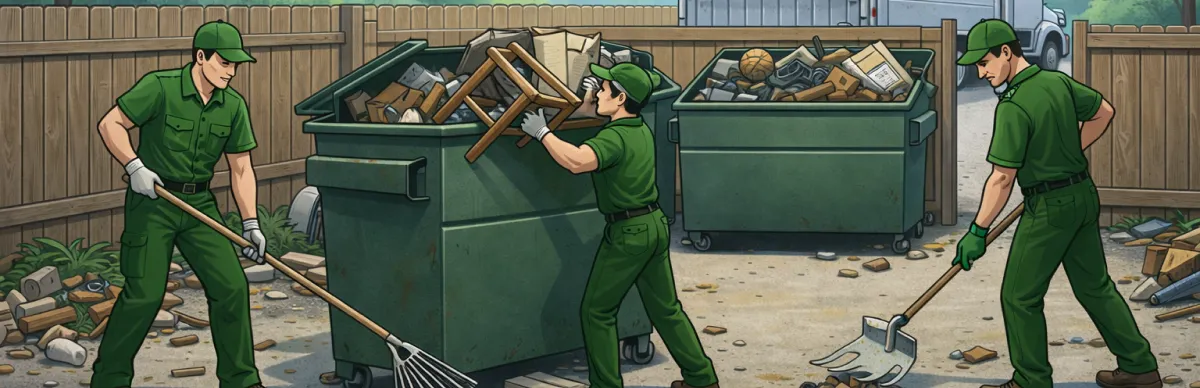
Professional Hoarding Cleanup Experts
Discreet and Compassionate Service
Fast Response Times
Thorough Sanitization and Odor Removal
Customized Cleanup Plans
Licensed and Insured Team
Coordinating Hoarding Cleanup with Dover’s Department of Public Works and Solid Waste Programs
Effective hoarding cleanup in Dover, MA requires close coordination with the Department of Public Works (DPW), which oversees municipal solid waste management and bulk item disposal. Residents must adhere to Dover’s bulk trash collection schedule, typically available by appointment through the DPW. The Dover Transfer Station, located at 211 Dedham Street, operates Monday through Saturday from 7:00 AM to 5:00 PM and requires a valid resident permit for access. Disposal fees are assessed by volume, with a minimum charge of $10 and a standard rate of $35 per cubic yard for large loads. Key requirements include:
- Scheduling bulk pickups at least 48 hours in advance
- Placing items curbside by 6:00 AM on collection day
- Separating recyclable materials from general waste
- Presenting proof of residency at the transfer station
- Following item-specific preparation guidelines (e.g., mattresses, electronics)
Department of Public Works
Town House, 5 Springdale Avenue, Dover, MA 02030
Phone: (508) 785-0032
Official Website: Department of Public Works
Dover’s Code Enforcement and Health Department Regulations for Hoarding Cleanup
Hoarding situations in Dover are subject to strict code enforcement and public health regulations. The Dover Board of Health may issue abatement orders if properties present fire hazards, pest infestations, or unsanitary conditions. Residents and property owners must comply with the Massachusetts State Sanitary Code (105 CMR 410), which mandates safe egress, proper waste storage, and remediation of hazardous conditions. Key compliance steps include:
- Obtaining necessary access permissions for cleanup crews
- Coordinating with the Board of Health for inspection and clearance
- Ensuring all walkways and exits remain unobstructed
- Addressing biohazardous materials with licensed professionals
- Documenting remediation for code compliance records
Board of Health
Town House, 5 Springdale Avenue, Dover, MA 02030
Phone: (508) 785-0032
Official Website: Board of Health
Environmental Compliance: Massachusetts Solid Waste Laws and Recycling Mandates in Hoarding Cleanup
Massachusetts enforces comprehensive solid waste regulations that directly impact hoarding cleanup projects in Dover. The Massachusetts Department of Environmental Protection (MassDEP) prohibits landfill disposal of certain materials, including electronics, mattresses, appliances with refrigerants, and hazardous waste. Dover residents must comply with these mandates by:
- Separating banned items for recycling or special disposal
- Utilizing the Dover Transfer Station’s electronics and appliance recycling programs
- Arranging for hazardous waste drop-off during scheduled collection events
- Following state landfill ban regulations
- Consulting MassDEP for guidance on regulated materials
Failure to comply may result in fines or refusal of waste collection. Proper documentation and adherence to recycling mandates are essential for legal and environmentally responsible cleanup.
Massachusetts Department of Environmental Protection
One Winter Street, Boston, MA 02108
Phone: (617) 292-5500
Official Website: Massachusetts Department of Environmental Protection
Safety and Professional Standards for Hoarding Cleanup in Dover Properties
Hoarding cleanup in Dover often involves significant safety risks, including exposure to mold, biohazards, and structural hazards. All cleanup activities must comply with OSHA worker safety requirements, and, for pre-1978 buildings, the EPA Lead-Safe Renovation Rule. Key safety protocols include:
- Conducting site assessments for hazardous materials (lead, asbestos, mold)
- Using personal protective equipment (PPE) for all workers
- Employing licensed professionals for hazardous waste removal
- Protecting property features (floors, walls, stairwells) during debris removal
- Maintaining liability insurance and documenting all work performed
Building Department
Town House, 5 Springdale Avenue, Dover, MA 02030
Phone: (508) 785-0032
Official Website: Building Department
What Neighborhoods Do We Serve Throughout Dover, MA?
- Dover Center: Features historic homes with narrow driveways and limited curbside access, requiring careful planning for truck parking and debris removal. Many properties are subject to historic district guidelines for exterior work.
- Chickering: Predominantly single-family residences with larger lots, allowing for easier placement of dumpsters and equipment. Driveway protection is recommended due to older asphalt surfaces.
- Springdale: Includes a mix of older homes and newer developments. Some streets are narrow, necessitating smaller vehicles and advance notification to neighbors for large-scale cleanouts.
- Noanet: Rural area with long, unpaved driveways and limited street lighting. Extended delivery times and site assessments are often required to ensure safe access for cleanup crews.
- Powissett: Characterized by estate properties and private roads. Gated access and HOA approval may be necessary before commencing cleanup activities.
- Cedar Hill: Multi-story homes with stairwell-only access in some cases. Heavy lifting protocols and additional labor may be needed for upper-floor debris removal.
- Haven Meadows: Newer subdivision with wide streets and modern infrastructure, facilitating straightforward equipment placement and efficient waste removal. HOA notification is typically required for exterior work.